A woman defends her luxury companionship lifestyle involving wealthy clients, travel, and gifts. Dr. Phil challenges her claims that she is “helping marriages” while exposing contradictions in her justification, boundaries, and reality of transactional relationships.
Dr. Phil Confronts a Woman Defending Her High-End “Companionship” Business and Claims It Helps Marriages
She describes her work as harmless companionship: dinners, conversations, and emotional support for wealthy men who “miss what their wives don’t offer anymore.” But Dr. Phil challenges her logic, questioning whether paid relationships truly “help marriages” or simply disguise emotional and financial transactions behind a comforting narrative.
A Lifestyle Built on Wealth, Attention, and “Emotional Compensation”
The conversation begins with a bold explanation of how the system works. The woman describes a website where men “give you thousands of dollars a month for batting your eyes and a pouty face and going to dinner with them.” She frames it not as exploitation, but as emotional fulfillment for clients.
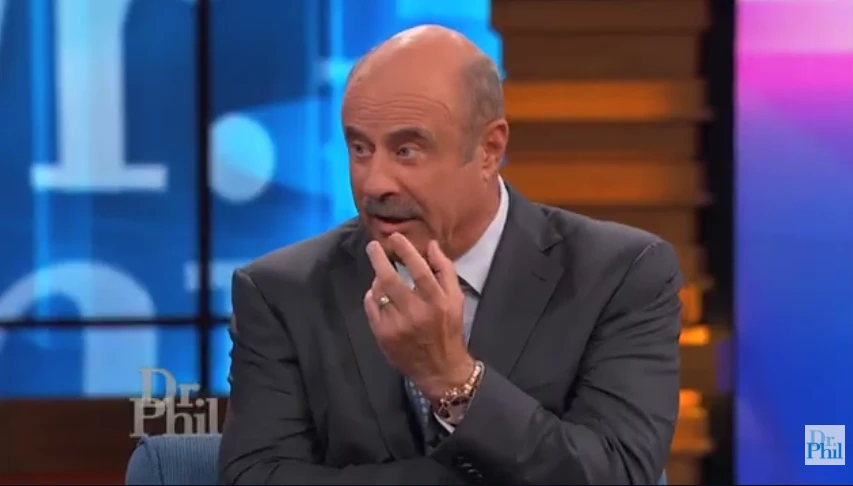
Her justification is consistent: these men are “looking for what their wife isn’t offering anymore after you’ve been married for so long.” In her view, she is not replacing anyone—she is filling emotional gaps.
“We Are Helping Marriages”
One of her strongest claims is: “we are helping marriages, that’s how I feel.”
She expands this idea, saying, “we make them happy so they go home to their wives and they’re like oh I’m happy now maybe I’ll treat you better.”
This argument reframes transactional companionship as a kind of emotional therapy for married men.
“Gift of Gab”
She insists physical intimacy is not necessary: “I don’t need to have sex, I call it the Gift of Gab.”
According to her, conversation, attention, and emotional presence are the real product being sold. She emphasizes that “you don’t need to, there’s ways around everything.”

Selective Boundaries and Expectations
She admits that some clients expect more, but says she is clear: “some of them will tell you I’m looking for that and I say well it’s not going to happen.”
If they are disappointed, she says, “they deal with it or they leave.” This suggests a controlled structure, but also highlights the transactional nature of expectations.
Dr. Phil Challenges the Logic Behind “Helping Marriages”
Dr. Phil pushes back on her framing. He questions whether the outcome she describes—men returning home happier—is actually beneficial or simply masking deeper relationship issues.

“You’re a Relationship Expert?”
Dr. Phil responds with skepticism when she positions herself as someone who understands relationships at a professional level, saying: “so you’re a relationship expert?”
The tone challenges the credibility of her interpretation of marriage dynamics.
Emotional Substitution vs Real Connection
Her argument is that she improves emotional states: men leave happier, therefore their marriages benefit. But Dr. Phil challenges whether temporary emotional relief is the same as solving relationship problems.
“Massage My Marriage”
He uses irony when summarizing luxury arrangements, referring to scenarios where men are “so glad that you’re here to massage my marriage.”
The phrase highlights the disconnect between emotional language and transactional reality.

The Financial Reality Behind the Lifestyle
As the discussion continues, details of payments and travel arrangements reveal the scale of the transactions involved.
Luxury Travel and Large Payments
She describes being flown to different cities with all expenses paid: “you’ve been flown to New York, all expenses paid, $6,000 hotel bill, $11,000 in spending money.”
In another case, she mentions receiving “$7,000” for a trip. These figures illustrate that the arrangement is highly lucrative.
“No Sex, Just Thanks for Coming”
She emphasizes: “no sex, just here you go, just thanks for coming.”
This statement is important to her defense, as it reinforces her narrative that the relationship is emotional rather than physical.

Wealth as Justification
She references clients with extreme wealth, including “a New Yorker worth $80 million.” Her argument suggests that in high-net-worth environments, these arrangements are normalized exchanges of attention for financial generosity.
Dr. Phil Exposes the Contradictions in Her Defense
While she insists her role is harmless and even beneficial, Dr. Phil focuses on inconsistencies in how she defines boundaries, value, and relationship ethics.
Fetish and Selective Positioning
When asked about client preferences, she admits: “the foot fetish is my favorite.”
This detail reveals a structured business model around client desires, even if framed as non-sexual or purely conversational.

Emotional Framing vs Transactional Reality
Dr. Phil’s challenge centers on a contradiction: she describes emotional support and “helping marriages,” but the structure is clearly transactional, involving payment, travel, and negotiated expectations.
“There’s Ways Around Everything”
Her statement “there’s ways around everything” becomes critical. It suggests flexibility in boundaries depending on circumstances, which complicates her claim of strict separation from physical expectations.

Final Verdict and Behavioral Insight
The central issue in this case is not simply the nature of the work, but the framing of its purpose. The woman presents her lifestyle as emotionally beneficial to others, arguing that she improves marriages by providing attention and companionship that spouses may no longer receive.
However, Dr. Phil’s perspective highlights a key contradiction: emotional relief obtained through paid interaction does not necessarily strengthen long-term relationships. In some cases, it may bypass the underlying issues entirely.
Her defense rests on three pillars:
-
- no physical intimacy required
- emotional satisfaction for clients
- financial transparency
But Dr. Phil questions whether these pillars are sufficient to justify calling the arrangement “helpful to marriages.”

Final Lesson
This conversation ultimately raises a broader question about modern relationships: when emotional needs are unmet, do people solve problems—or outsource them?
The woman’s worldview sees companionship as a service that improves emotional well-being. Dr. Phil’s concern is that this approach may mask deeper relational breakdowns rather than resolve them.
The key takeaway is that emotional connection, when commodified, changes its meaning. What feels like support to one person may function as avoidance of real intimacy issues for another.
In the end, the episode is not just about money or boundaries—it is about how people define connection, and whether paying for emotional relief strengthens relationships or simply postpones their repair.

