
A 16-year-old insists on receiving a $230,000 Mercedes G-Wagon for her birthday while clashing with her mother over lifestyle expectations. Dr. Phil analyzes entitlement, financial pressure, and modern parenting boundaries.
Teen Demands a $230K Mercedes G-Wagon for Her Sweet 16 — Dr. Phil Breaks Down Entitlement and Parenting Pressure
Nicholette is turning 16 and says she is “dead set” on getting a Mercedes G-Wagon AMG for her birthday, worth over $230,000. Her mother pushes back, suggesting a Toyota or Honda instead. What follows is a heated discussion about luxury expectations, parenting limits, and a teenager who believes she “needs” a car that most adults cannot afford.
A Luxury Dream That Starts With a $230,000 Demand
The conversation opens with a shocking expectation: “Nicholette turns 16 next month, she’s dead set on me giving her a car.” The mother immediately contrasts two worlds—practical vs luxury—saying she would buy “a nice reliable Toyota Honda,” but her daughter would “never set foot in it.”
This sets up the central conflict: need versus desire, responsibility versus image.

“I Want a Mercedes Benz G-Wagon”
Nicholette’s demand is direct: “I want a Mercedes Benz G-Wagon AMG matte black.”
She does not frame it as a wish, but as an expectation. The tone suggests certainty rather than negotiation.
The $230,000 Reality Check
The cost is explicitly stated: “The exact G-Wagon I want is $231,000.”
This number becomes the emotional anchor of the argument. It highlights the gap between teenage desire and financial reality.
“I’m a Princess, I’m Definitely Worth the Price”
Perhaps the most striking statement is: “I’m a princess. I’m definitely worth the price.”
This line captures the entitlement conflict at the heart of the episode. The car is not just transportation—it is identity, status, and self-worth.
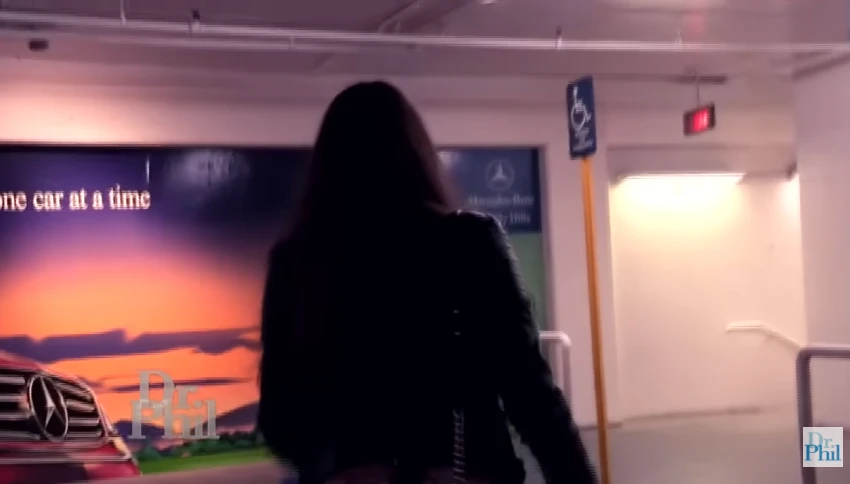
A Mother Caught Between Limits and Pressure
The mother represents a more practical viewpoint. She questions the logic of a luxury vehicle for a teenager and emphasizes safety and reliability instead of status.
But she also reveals the emotional strain of parenting under pressure.
“It’s Pretty Normal for People to Get Nice Cars”
The daughter attempts to normalize her demand: “It’s pretty normal for people to get nice cars.”
This shows a perception shaped by environment and social comparison rather than financial realism.
The Toyota vs G-Wagon Divide
The mother suggests a Toyota or Honda, but the daughter rejects it completely: “She would never set foot in it.”
This creates a symbolic divide between “ordinary” and “elite” identity.

“She’s Very Special”
At one point, the mother says, “She’s very special,” suggesting affection mixed with concern.
This reflects a common parenting tension: loving a child while struggling with unrealistic expectations.
The Psychology of Status, Image, and Identity
As the conversation continues, it becomes clear that the G-Wagon is not just about transportation—it represents image, belonging, and self-image.
“I Can Buy Even More Bags”
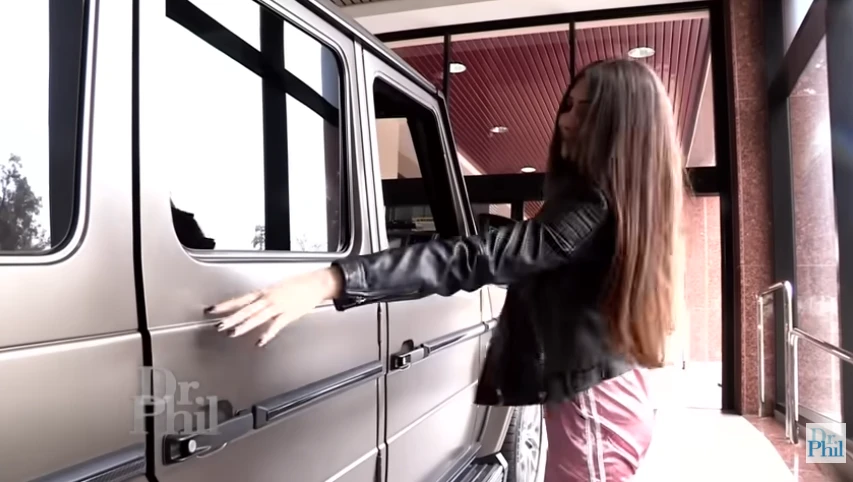
While exploring the car, Nicholette shifts to lifestyle imagery: “I can buy even more bags and throw them in the back.”
This reveals how the car is tied to fashion, luxury branding, and social identity.
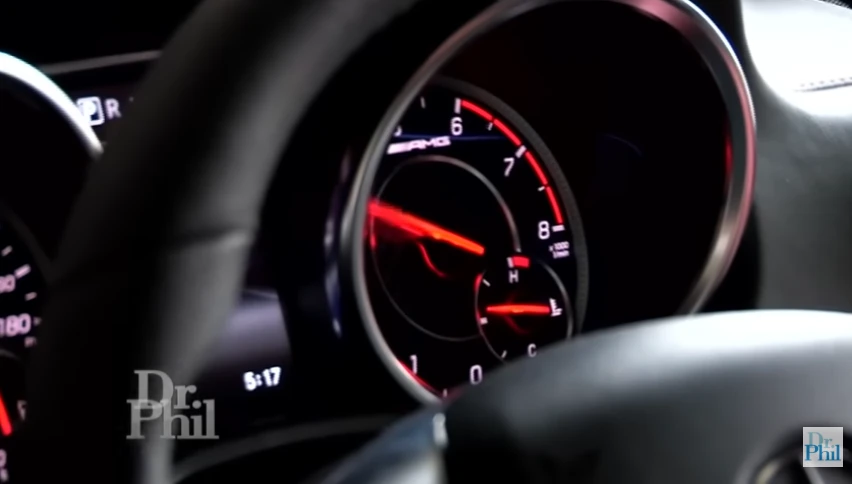
Designer Aspirations
She mentions needing a “red and black Louboutin backpack to go with this.”
The car becomes part of a full luxury ecosystem rather than a practical purchase.
“Because I Can Have It”
When asked why she wants it, she responds: “Because I can have it.”
This highlights the mindset of access rather than necessity—wanting something because it is available, not because it is needed.
Dr. Phil’s Underlying Reality Check
Although Dr. Phil does not directly dominate the dialogue in this segment, the structure of the conversation itself serves as a psychological test of values.
The contrast between financial practicality and luxury expectation becomes the central lesson.
Need vs Want
When asked “Why do you need a G-Wagon?” the justification becomes weak: “I just really want it.”
This shift from “need” to “want” exposes the emotional rather than practical motivation behind the demand.
Lifestyle Comparison
The teenager references seeing G-Wagons “all near my house,” suggesting normalization through environment.
This reinforces how exposure to wealth can distort financial expectations.

Emotional Attachment to Objects
The repeated admiration—“the interior is amazing,” “there’s so much space,” “it looks so nice”—shows emotional attachment to status symbols rather than function.
Final Verdict and Lesson
The verdict is not about whether a teenager should ever want luxury. It is about understanding boundaries, financial reality, and emotional development.
Nicholette’s desire for a G-Wagon reflects a culture where status symbols are heavily tied to identity. However, the conversation shows a clear disconnect between aspiration and responsibility.
Her mother’s resistance highlights a necessary boundary: parenting is not about matching desire, but guiding expectation.

The key lesson is that value perception is learned, not inherited. When teenagers equate worth with price tags, luxury becomes identity rather than achievement.
In the end, this Dr. Phil moment exposes a broader cultural issue: when “I want it” becomes “I deserve it,” financial reality and emotional development often collide.

