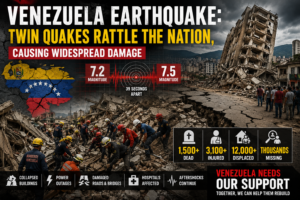
On June 24, 2026, Venezuela experienced one of the most destructive natural disasters in its modern history when two powerful earthquakes struck within just 39 seconds of each other. The twin earthquakes, measuring magnitude 7.2 and 7.5, shook large parts of northern and central Venezuela, sending residents fleeing from homes, offices, and public buildings. The powerful tremors caused extensive destruction in the capital, Caracas, and the coastal state of La Guaira, leaving thousands of buildings damaged or destroyed and triggering a massive humanitarian response.
The Earthquakes
According to the U.S. Geological Survey (USGS), the first earthquake, measuring magnitude 7.2, struck approximately 160 kilometers west of Caracas. Just 39 seconds later, a stronger magnitude 7.5 earthquake hit the same region. Because the second quake followed almost immediately after the first, many people had little or no time to reach safety before the stronger shaking began.
The earthquakes originated along the active fault system that marks the boundary between the Caribbean Plate and the South American Plate. Venezuela has experienced destructive earthquakes throughout its history, but experts described these twin events as among the strongest to affect the country in more than a century.
Immediate Impact
The twin earthquakes caused severe structural damage across several regions. High-rise apartment buildings, offices, hospitals, schools, bridges, and roads suffered heavy damage. Numerous buildings collapsed completely, trapping residents beneath piles of concrete and steel.
The worst-hit areas included:
- Caracas
- La Guaira
- Yaracuy
- Carabobo
- Miranda
- Falcón
In Caracas, emergency crews worked throughout the night searching collapsed residential buildings for survivors. Power outages affected many neighborhoods, while damaged roads slowed rescue operations.
Human Casualties
As rescue operations continued, the number of casualties steadily increased.
Recent official reports indicate:
- Nearly 1,500 people have died
- More than 3,100 people have been injured
- Over 12,000 people have been displaced
- Tens of thousands remain missing or unaccounted for while rescue teams continue searching collapsed structures.
Emergency officials cautioned that these figures could continue to rise as rescue workers reach isolated communities and remove debris from collapsed buildings.
Rescue Operations
Thousands of firefighters, police officers, soldiers, medical teams, and volunteers were mobilized immediately after the disaster.
Search-and-rescue teams used:
- Search dogs
- Heavy excavators
- Thermal imaging equipment
- Listening devices
- Specialized rescue tools
International rescue teams also arrived from several countries to support Venezuelan authorities.
Despite difficult conditions, rescuers successfully pulled dozens of survivors from collapsed buildings days after the earthquake, including children and elderly residents. These rescues provided hope amid widespread devastation.
Damage to Infrastructure
The earthquakes significantly disrupted daily life across Venezuela.
Major damage included:
- Hundreds of collapsed residential buildings
- Damaged hospitals
- Cracked highways and bridges
- Airport disruptions
- Electrical outages
- Water supply interruptions
- Telecommunications failures
Several hospitals were evacuated because of structural concerns, forcing medical staff to treat patients outdoors or in temporary field hospitals. Relief agencies also struggled to deliver aid because damaged roads delayed transportation.
Aftershocks
Following the main earthquakes, hundreds of aftershocks continued to shake the affected region. Some aftershocks were strong enough to frighten survivors already traumatized by the initial disaster.
Authorities warned residents not to return to damaged buildings until engineers completed structural inspections. Emergency officials also advised people to prepare emergency supplies in case of additional seismic activity.
Humanitarian Challenges
The disaster created an urgent humanitarian crisis.
Many survivors lost:
- Homes
- Personal belongings
- Access to clean water
- Electricity
- Food supplies
Temporary shelters quickly filled with displaced families.
Medical facilities became overwhelmed by injured patients requiring emergency surgery and trauma care. Relief organizations distributed food, drinking water, blankets, hygiene supplies, and medicines while volunteers established community kitchens and temporary shelters.
International Response
Governments and humanitarian organizations around the world expressed solidarity with Venezuela.
International assistance included:
- Urban search-and-rescue teams
- Medical personnel
- Emergency food supplies
- Water purification equipment
- Financial assistance
- Temporary shelters
The United States, European nations, and neighboring Latin American countries announced humanitarian support for rescue and recovery efforts. International agencies also coordinated with Venezuelan authorities to assess long-term reconstruction needs.
Economic Consequences
The earthquakes caused billions of dollars in damage.
Major economic losses resulted from:
- Destroyed housing
- Damaged businesses
- Infrastructure repairs
- Transportation disruptions
- Industrial shutdowns
Ports and airports experienced interruptions that affected commerce, while many businesses remained closed because buildings required safety inspections. Experts expect reconstruction to take several years.
Public Response
Despite the destruction, communities across Venezuela demonstrated remarkable resilience.
Citizens volunteered to:
- Donate food
- Provide temporary shelter
- Deliver medical supplies
- Assist rescue workers
- Support displaced families
Many neighborhoods organized volunteer groups to clear debris, distribute supplies, and help locate missing residents. Stories of neighbors helping one another became symbols of hope during a difficult period.
Lessons from the Disaster
The earthquakes highlighted the importance of:
- Earthquake-resistant construction
- Strong emergency response systems
- Public disaster preparedness
- Reliable communication networks
- International humanitarian cooperation
Experts emphasized that stricter building standards and improved emergency planning can significantly reduce casualties during future earthquakes.
Conclusion
The twin earthquakes that struck Venezuela on June 24, 2026, stand among the country’s worst natural disasters in recent history. Two massive earthquakes occurring less than a minute apart caused widespread destruction across Caracas, La Guaira, and surrounding regions, leaving thousands dead or injured and displacing many more. Rescue teams continue searching for survivors while humanitarian organizations work to provide food, shelter, and medical care. As Venezuela begins the long process of rebuilding, the disaster serves as a powerful reminder of both the destructive force of nature and the resilience of communities that come together in times of crisis.

