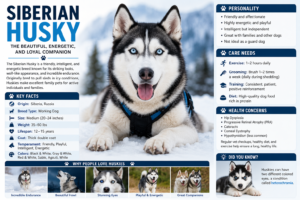
The Siberian Husky is one of the most recognizable and admired dog breeds in the world. With its striking blue or multi-colored eyes, thick double coat, wolf-like appearance, and friendly personality, the Husky has captured the hearts of dog lovers everywhere. Originally bred to pull sleds across the icy landscapes of northeastern Asia, these remarkable dogs are known for their endurance, intelligence, and playful spirit.
Whether you are considering adopting a Siberian Husky or simply want to learn more about this fascinating breed, understanding their history, personality, care requirements, and health needs is essential. Huskies are not only beautiful but also highly energetic dogs that thrive in active households where they receive plenty of exercise, training, and companionship.
History of the Siberian Husky
The Siberian Husky originated with the Chukchi people of northeastern Siberia, who relied on these hardworking dogs to pull sleds across long distances in harsh Arctic conditions. Their ability to travel efficiently over snow while carrying supplies made them invaluable companions for survival.
In the early 1900s, Siberian Huskies were introduced to Alaska, where they gained recognition during sled dog races. They became internationally famous after participating in the historic 1925 serum run to Nome, Alaska, helping deliver life-saving medicine during a diphtheria outbreak. Their courage, speed, and endurance earned them worldwide admiration and established the breed as one of history’s most respected working dogs.
Today, Siberian Huskies are popular family pets, sporting dogs, therapy animals, and competitors in dog sports around the world.
Physical Appearance
One of the Husky’s greatest attractions is its stunning appearance. Medium-sized yet athletic, Huskies possess an elegant balance of strength and agility.
Adult males typically weigh between 45 and 60 pounds (20–27 kilograms), while females generally weigh between 35 and 50 pounds (16–23 kilograms). Most stand between 20 and 24 inches (51–61 centimeters) at the shoulder.
Their thick double coat protects them from extremely cold temperatures. Coat colors vary widely, including black and white, gray and white, red and white, sable, agouti, and pure white. Many Huskies have distinctive facial masks and expressive eyes that may be blue, brown, amber, or even one of each color.
Their bushy tail often curls over their back, while erect ears and almond-shaped eyes contribute to their alert and intelligent expression.
Personality and Temperament
Siberian Huskies are famous for their friendly, outgoing nature. They generally enjoy meeting people and tend to greet strangers with curiosity rather than suspicion. This friendliness means they are usually poor guard dogs despite their wolf-like appearance.
Huskies are highly social animals that prefer spending time with people or other dogs. They dislike being left alone for extended periods and may become bored or destructive without enough mental stimulation.
Playfulness is another hallmark of the breed. Huskies often maintain puppy-like enthusiasm well into adulthood, making them entertaining companions for active families.
Although intelligent, they are also independent thinkers. Instead of blindly obeying commands, Huskies often evaluate whether following instructions benefits them. This independence can make training more challenging compared to some other breeds.
Exercise Requirements
Perhaps the most important consideration before owning a Husky is their enormous need for exercise.
Originally bred to run dozens of miles while pulling sleds, Huskies possess incredible stamina. A short walk around the neighborhood is rarely enough to satisfy their physical and mental needs.
Most adult Huskies require at least one to two hours of vigorous exercise every day. Suitable activities include:
- Long walks
- Jogging
- Hiking
- Running
- Playing fetch
- Agility training
- Canicross
- Sledding in snowy climates
Without sufficient exercise, Huskies may develop behavioral issues such as excessive barking, digging, chewing furniture, or attempting to escape from the yard.
Training a Husky
Training a Siberian Husky requires consistency, patience, and positive reinforcement.
These dogs respond best to praise, treats, toys, and enjoyable training sessions. Harsh punishment can damage trust and reduce their willingness to cooperate.
Early socialization is essential. Exposing puppies to different people, environments, sounds, and animals helps them become confident, well-adjusted adults.
Basic obedience training should begin early, including commands such as:
- Sit
- Stay
- Come
- Down
- Leave it
- Heel
Reliable recall can be especially difficult because Huskies have strong prey drives and may chase squirrels, rabbits, or other small animals if allowed off leash.
Grooming Needs
Although Huskies have thick coats, grooming is surprisingly manageable.
Brushing once or twice each week helps remove loose hair and prevents matting. However, during seasonal shedding periods—often called “blowing the coat”—daily brushing may be necessary.
Their coat naturally repels dirt, meaning Huskies usually require baths only every few months unless they become particularly dirty.
Routine care should also include:
- Nail trimming
- Ear cleaning
- Dental brushing
- Regular veterinary checkups
Diet and Nutrition
A balanced, high-quality diet supports your Husky’s health throughout life.
Protein-rich dog food helps maintain muscle mass and energy levels. Fresh water should always be available.
Portion sizes depend on age, activity level, metabolism, and overall health. Highly active Huskies generally require more calories than less active individuals.
Avoid feeding excessive treats or human foods that may contribute to obesity.
Common Health Concerns
Overall, the Siberian Husky is considered a relatively healthy breed with a life expectancy of approximately 12 to 15 years.
However, like all breeds, they may be prone to certain inherited conditions, including:
- Hip dysplasia
- Progressive retinal atrophy (PRA)
- Cataracts
- Corneal dystrophy
- Hypothyroidism (less common)
Responsible breeders screen their breeding dogs for genetic health conditions to reduce the likelihood of inherited diseases.
Regular veterinary examinations, vaccinations, parasite prevention, and a nutritious diet contribute to a long, healthy life.
Living with a Husky
Huskies adapt well to various climates, provided they receive appropriate care. Their thick coat insulates them in cold weather but also helps regulate body temperature during warmer months. However, strenuous exercise should be limited during extremely hot weather.
A secure fence is essential because Huskies are notorious escape artists. They may jump, climb, or dig beneath fences if given the opportunity.
Apartment living is possible for dedicated owners who provide extensive daily exercise, but homes with secure yards generally offer more space for supervised play.
Because Huskies are pack-oriented, they often enjoy living with another compatible dog.
Are Huskies Good Family Dogs?
Yes, Siberian Huskies can make wonderful family companions.
They are generally affectionate with children and enjoy participating in family activities. However, as with any dog, interactions between young children and dogs should always be supervised.
Families who enjoy hiking, running, camping, or outdoor adventures often find Huskies to be excellent companions.
People seeking a calm, low-maintenance dog may find the breed challenging due to its energy and independence.
Interesting Facts About Huskies
- Huskies can have two different colored eyes, a condition known as heterochromia.
- Their thick coat helps regulate body temperature in both cold and moderate climates.
- They are famous for their expressive howls rather than frequent barking.
- Huskies are among the fastest and most enduring sled dogs in the world.
- Many Huskies are skilled escape artists capable of digging under or climbing over fences.
- Their friendly personalities usually make them poor guard dogs.
- Despite their wolf-like appearance, Huskies are domestic dogs with affectionate and playful temperaments.
Is a Husky Right for You?
Before bringing home a Siberian Husky, consider your lifestyle carefully.
This breed thrives with owners who enjoy daily exercise, outdoor adventures, and spending significant time with their pets. Huskies require commitment, training, and mental stimulation throughout their lives.
If you can provide consistent exercise, loving companionship, proper nutrition, and regular veterinary care, a Husky will reward you with loyalty, affection, intelligence, and endless enthusiasm. Their playful nature, remarkable beauty, and adventurous spirit make them one of the world’s most beloved dog breeds.
Conclusion
The Siberian Husky is far more than just a beautiful face. Behind those striking eyes lies a hardworking, intelligent, energetic, and affectionate companion that has served humans for generations. While they demand time, exercise, and patience, the rewards of sharing life with a Husky are immense.
For active individuals and families prepared to meet their needs, the Siberian Husky offers years of friendship, adventure, and unforgettable memories. With proper care, training, and love, these extraordinary dogs continue to prove why they remain one of the most admired breeds across the globe.

